I turned 46 this year and on that day, I decided to run 46 kilometres — one kilometre for each year of my life.
The idea arrived quietly in the days after Ultra Trail Cape Town (UTCT). The race was done, the body intact, but the result still lingered somewhere unresolved… as if something was left unfinished… with a sense that the outcome hadn’t been fully in my control. I felt the familiar pull to go long again, not out of competition, but out of curiosity to plan, execute and have an adventure that I would be completely in charge of. To try something fully self-managed, without pressure, without deadlines, without start lines or cut-offs. Something honest. Something mine.
Being back in Lagoa for the Christmas break made that temptation dangerously accessible. I could design a route through places I knew well, passing cafés, towns, familiar streets. If I needed something like food or water, it would be easy to refuel and get support. If anything went wrong (or if motivation simply evaporated), I could stop, call an Uber and just go home. No cost. No obligation. An opportunity to keep it fluid and enjoyable.
My mind flirted with the idea of 100 kilometres and I got to the place where I planned a route for it: revisiting the Via Algarviana all the way to Monchique, and then following the beautiful coastline from Lagoa‘s municipality, as I had done many times before. Travel had accumulated however… I felt my body fatigued, asking for restraint, even if the voice of ambition wasn’t done speaking inside my mind. Listening felt wiser. Something shorter but meaningful. Something that didn’t require proving anything. Something I’d be happy achieving, rather than being left frustrated by the inevitability of not being able to finish.
As the mental battle to take a decision on what to do was unravelling, a separate, creative thought appeared. My birthday was approaching and after days of unsettled weather caused by a stubborn low-pressure system over the Algarve — heavy rain, wind, rough seas and even some local flooding — the forecast suddenly opened a single, clean window. Sun. Blue sky. Cold, but dry. Almost suspiciously precise. Exactly on the 29th of December.
And so Project 46 @ 46 took shape.
The idea was simple in its structure… but expansive in intent. I would run one kilometre for each year of life, and within each kilometre I would return to that year and recall key events from my past. Not chronologically perfect, perhaps not evenly across each year, but to the best of my ability. I would mostly recall what mattered: the joy, the struggles, the people, the moments that shaped me, even if I didn’t yet know it at the time. Some kilometres would carry lightness. Others would carry weight. Some would be vivid. Others would be blurred. Some might escape me altogether. There was no judgement attached to the memories, only a form of time travel. An attempt to acknowledge each year for what it was and then let it go as the next kilometre unfolded.


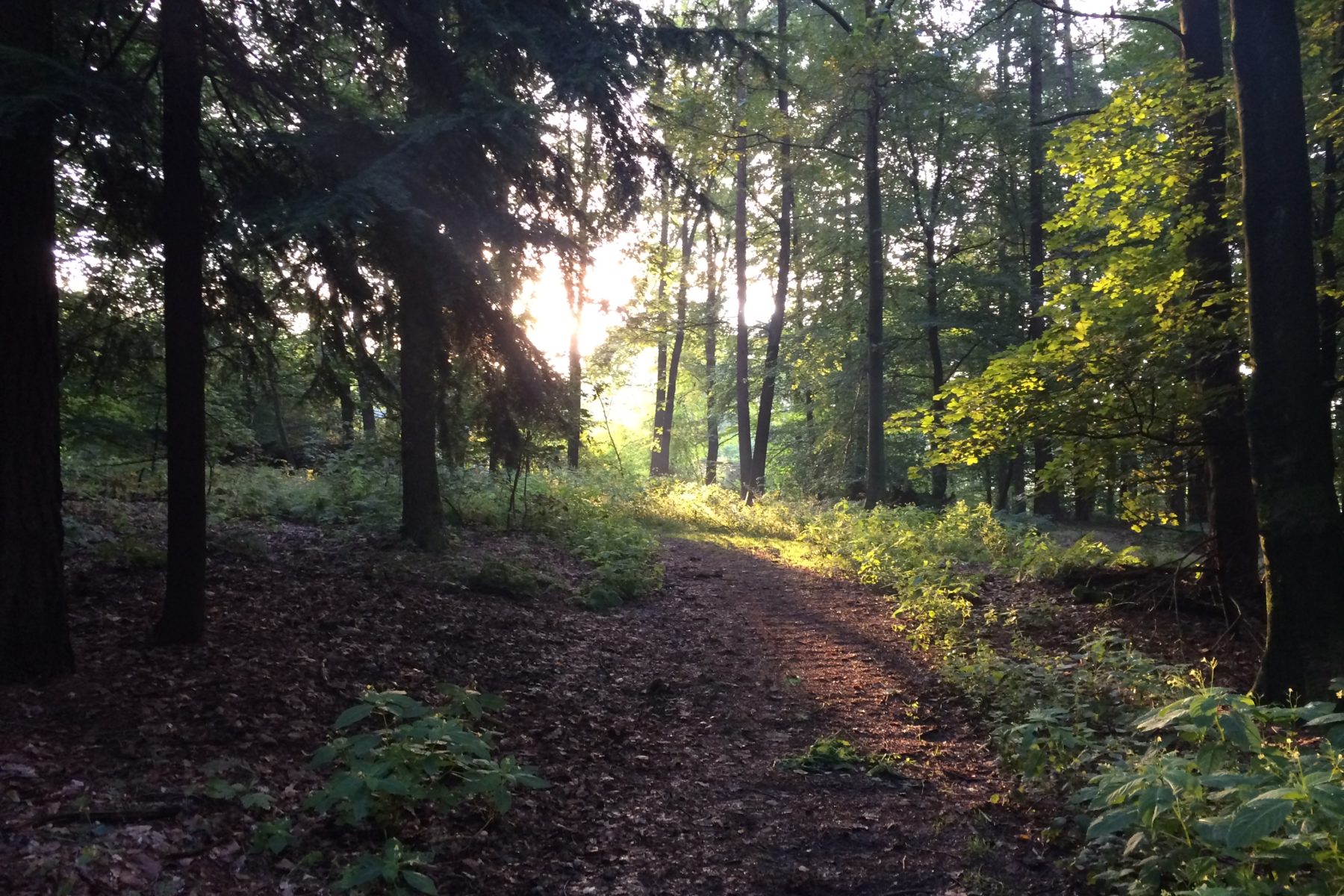
I woke at 6:30 and left the house at exactly 7:00, still in the dark, just as the bells from Lagoa’s church marked the hour. It felt less like a start and more like permission to go. And so I was on the run.
The loop was designed deliberately from west to east, a direction I knew well from having run these trails many times before. Moving toward the rising sun here always felt right. When reaching the coastline, the light would open the cliffs gradually, reveal the sea in layers and offer the best angles for photographs. More importantly, it revealed the landscape as if it were waking up for me. From Lagoa I moved through Estômbar, Sesmarias, Aldeia de Luís Francisco and then Ferragudo, before committing fully to the coast. Carvoeiro would come later, then Algar Seco, the famous Praia da Marinha, the iconic Algar de Benagil and Senhora da Rocha. On the way back I’d pass Adega da Caramujeira and finally back to the start at Lagoa.


This wasn’t a race and that freedom mattered. I used the day to test nutrition without consequence. Breakfast was unapologetically simple: two good slices of pizza, exactly what had worked for me months earlier in the Grand Canyon. The first two hours passed on minced fruit and gummies. For the remaining three, I switched entirely to Maurten drink mix. It worked flawlessly. There was something deeply satisfying about that simplicity — trusting preparation, without noise, urgency or performance anxiety. Just flow. Just me and the landscape that so easily feels like home.


Once past Ferragudo, the trail opened into one of the Algarve’s most exposed and honest stretches of coastline: the Caminho dos Promontórios or Path of the Headlands. I’ve done this many, many times in the past and always wanted to write about it here. The path links Praia do Molhe to Carvoeiro, across roughly 6 km with around 180 metres of elevation gain. One can actually initiate the coastline as soon as Praia Grande, through the sand and up the cliff. Walked, the whole path usually takes two to three hours to do (oneway). Running compresses time into roughly 1 hour. The trail traces sheer limestone cliffs, passes quiet coves, transverses elevated viewpoints and remains open to the Atlantic almost the entire way. There is little shelter, just rock, sea and wind. One passes through Praia do Pintadinho, Farol da Ponta do Altar (lighthouse), Praia dos Caneiros, the Torre da Lapa / Torre da Marinha monument and a series of inaccessible beaches, prior hitting Praia do Paraíso and Carvoeiro. The whole journey is made with the ocean always present, audible even when unseen. With my soul connected to something so much larger than me. And with the amazement of dazzling views that take our breath away at each moment.


Further east and after Carvoeiro, the coastline becomes more accessible, shaped by a network of pathways carved and maintained by human hands. The Caminho do Algar Seco traces a series of narrow routes laid directly above the cliffs, suspended between land and sea. It’s a short stretch but a dense one: carved rock, abrupt drops, natural windows opening onto the Atlantic. The path gradually funnels everything toward Algar Seco itself, where erosion has sculpted caves, arches and voids into the cliff face. It feels less like passing through a place and more like being absorbed by it, a natural pause before the coastline reveals itself again.


From there, the Percurso dos Sete Vales Suspensos or Seven Hanging Valleys Trail unfolds with a different rhythm and a wider scale. Stretching roughly 6 km between Algar Seco and Praia da Marinha, with about 180 metres of accumulated ascent, the path is typically walked in two to three hours. Running it sharpens awareness rather than speed. The trail repeatedly dives and climbs between beaches and cliff tops, revealing sea arches, sinkholes and suspended valleys carved by erosion and collapse. It passes by Praia de Vale Centeanes, Farol de Alfanzina (lighthouse), Leixão do Ladrão, Praia do Carvalho, Praia de Benagil, up to Praia da Marinha. These places are famous for a reason. They’re gorgeous. This is where I found more people on the way, a lot of which I personally interacted with, in a shared acknowledgement of beauty and wonder. If you’re looking for a shorter stretch that invites awe, this is it!


Up to this point, the trails had been clearly defined and confidently marked, following international hiking signage that leaves little doubt about direction or intent. Also about places of risk and where you need to be careful (yes, I unfortunately had to warn a few hikers that those risky areas mean there is literally no ground below their feet, due to large arches visible only via seaside on a boat!). Beyond the Percurso dos Sete Vales Suspensos, the markings fade but the trail through the coastline continues. Staying high on the cliffs, it is still possible to move eastward, tracing the edge of the land.


The path passes through Praia do Barranquinho, skirts the Algar de Albandeira and opens onto Praia de Albandeira, framed by its sculpted stone arch rising cleanly from the water. From there, the coast continues toward Praia Nova, reachable through the tunnel that links it to Praia da Senhora da Rocha. Above it all stands the Forte da Nossa Senhora da Rocha with its white chapel, perched on the promontory between seas, watching both sides of the coast in quiet endurance. One could go all the way to Armação de Pêra but this was the point of return for me.

From the first kilometres, I assigned meaning to distance. One kilometre. One year. The years came in order. Early kilometres were childhood: my nanny, primary school, a broken arm in second grade, friendships that somehow survived decades. Endless play with my brother and sister. Family holidays first in the north, and later across Portugal, guided by my mother’s expertise as a history teacher. Then adolescence: changing schools, feeling more mature by proximity with older kids, Lisbon at seventeen, living with my aunt before stepping fully into independence. Sharing a home with my sister. Fully stepping into adulthood. Starting to work before university was finished. Moving abroad. Meeting my wife. The birth of my first son and the overwhelming bliss it brought! Then my second son and the overwhelming bliss it also brought! Diving deeper into joy. Then work trips across continents. Remarkable people. Teams built. Great work delivered and achievements to be proud of. But also tough moments… My father’s illness. Thinking of people lost, of family no longer with us. Remembering that life is made of constant ups and downs. Discovering new passions… trail running, not as a sport but a way of living, with strong values, in deep connection with my body and with nature. And becoming vegetarian.
The early kilometres glowed with nostalgia. The later ones carried something else: a quiet insistence that time accelerates and that life must be enjoyed deliberately. At km 46 I was filled with a sense of achievement but, moreover, with the recognition of where I am and how lucky I am to be here.


I returned to Lagoa after 5 hours and 48 minutes. Forty-seven kilometres in total… a small surplus I accepted without argument 😉. What remained wasn’t euphoria or exhaustion. It was something quieter: confidence in what I’ve built and who I’ve become, gratitude for what I have, quiet satisfaction for a beautiful morning in solitude and the serenity to trust what is to come.
Full details of the journey can be found on Strava.
Project 46 @ 46 wasn’t about redeeming failures of the past nor about proving resilience. It was about freedom of spirit, opening up to being awestruck and a celebration of life. About moving through familiar land while revisiting an unforgettable amount of memories. One kilometre at a time. One year at a time.