The arrival in Cape Town happens in November, at the height of Spring and at a time when warm temperatures are threatening to boil the weekend. I’ve just landed for Ultra Trail Cape Town (UTCT) and I’m bound to take on the 100 km distance again. What dazzles me upon arrival isn’t the blue sky, the seagulls hinting at the closeness of the sea or the towering calmness of Table Mountain above us. It’s the warmth and hospitality of the people, the candid smiles and the genuine interest when greeting strangers. People look into our inner selves, they want to know us, they seek connection. There’s a warmth that goes beyond the nice weather and the beautiful nature the country has to offer. It lies with its people and it gives me the quiet feeling that this short visit will be filled with joy.


It’s not my first time in South Africa. I visited the country in 2018 on a business trip and was lucky enough to squeeze in a quick ascent of Lion’s Head to catch the sunset, a perilous climb up Table Mountain through the Indian Venster and a ride along Chapman’s Peak Drive with a stop to see the penguins at Boulders Beach. I also managed visits to the Castle of Good Hope and the District Six Museum while the rest of the week was packed with long workshop days. If you love getting embedded in the local culture and history of the places you visit, don’t miss the museum. I highly recommend the guided tour, taken by a former resident who walks you through what once was home.
Travelling alone this time, I took the opportunity to disconnect, enjoy a couple of holidays and focus on hardening myself for the race. Good food, heavy carbo-loading, intense hydration, bottled drinks only, no ice, appropriate sleeping, acclimatisation, gear ready… and so much more. All the preparation you can think of. I felt determined and highly convinced I was going to finish this race after all the setbacks this year and the countless times when things didn’t go as planned.
In May this year I ran Wings for Life, my first time raising funds for a just cause. The event revolves around a foundation that supports research towards finding a cure for spinal cord injury. The format is fascinating for two reasons: there is no finish line, instead a catcher car drives the course and eliminates runners as it passes them. The last one standing wins. Secondly, the race happens simultaneously across multiple locations around the world, turning it into a de facto international event. More than 310,000 people participated this year and over 8.6 million euros were raised. Beyond my initial contribution — the registration fee goes entirely to the foundation — I raised more than 500 euros through the support of family, friends and colleagues. It feels good to be part of something that goes beyond athletic achievement… which, as you probably suspect by now, was not fantastic this year. I followed a tremendous winter training plan to try to reach the marathon distance under the 3-hour mark. Turns out that after hitting the half-marathon in 1h28, I couldn’t walk due to hip pain. Continuing at a slower pace wasn’t a bright idea as I eventually found out I had torn a muscle fiber in my hip. Five months later I was still recovering. Subscribing to UTCT became a celebration of avoiding a serious injury and an answer to a strong desire to have a big, time-consuming adventure in the outdoors, with nature close and my soul closer.


As I stood at the start line of the race, in the heart of the Gardens neighbourhood, among fellow adventurers at 04:00 in the morning, I recalled all the training that brought me here. All the places I ran through, all kinds of weather, to prepare myself for this moment. I remembered the serious challenges I had taken on… Madeira, Grand Canyon, Mont Blanc, Zion, Bryce… so many adventures shaping who I am and what I can do as an athlete. I thought of my family, my wife and kids, my friends, my parents, their struggles… and how grateful I am to be able to enjoy experiences like this.
A couple of weeks before UTCT, as preparation, I ran Ultra Trail Aldeias do Xisto (UTAX), one of the most famous races in Portugal. At the heart of the country, UTAX crosses traditional countryside villages built from schist, the stone of the region. I had aimed for the 56 km race but ended up quitting at km 40 after failing to hydrate properly and succumbing to stomach issues. My confidence was shaken to the bone. Through reflection and the humility to accept that there is always more to learn, I set myself on a course to find help, get a new nutritionist and revise my plan with my coach.


So here I am at the start of Ultra Trail Cape Town, my heart beat strong with gratitude for Solange and Armando, whose unconditional support made UTCT not only dreamable but possible. They gave me the audacity to continue believing and to dare to dream it could be done. I’m thankful beyond words…


It was with all this emotion that the race began. With the city lights keeping us company and an unrelenting wind sweeping across the bay, we quickly descended downtown to start ascending just below Signal Hill. We first ran in the direction of Lion’s Head and traced a panoramic loop around it, with gorgeous views over Camp’s Bay and the Atlantic coastline. The sun was slowly coming up and the view of the city was dazzling in the orange morning light. Soon enough we reached Signal Hill, around the 2-hour mark, with a wide view across the whole Cape Town bay.
Challenge 1: with at least 1h30 to the next aid station and temperatures rising toward a forecasted 26°C, we knew we had to fully reload fluids before continuing. To our utter surprise, there was no water at the aid station! None!! Electrolytes and isotonic drinks were also out. The options were cola or melted ice water and with all the preparation to avoid stomach issues, neither was an option. Definitely made me think of the whole time I brushed my teeth with bottled water.
We all made the same decision: keep going, hope for the best and recover later. It was too early in the day to panic. Still, between hours three and four, we were all running completely dry. The route flowed behind Sea Point Promenade and along the contour path below Lion’s Head toward Kloof Nek. It is extremely runnable and often offers patches of shade, which felt like gifts.
Recovery 1: at the next aid station it was time to activate the SOS mechanisms I had learned with Solange: an extra dose of water with electrolyte capsules. Eat well. Take time to recover. Lower body temperature. Go to the toilet. Leave the aid station reborn.


The biggest climb of the race starts here. It cuts across a small plateau then runs parallel to the mountain wall, like a ridge halfway up the slope, below the cable car and all the way to the base of Platteklip Gorge. To reach it, you take a single track that is one-third runnable trail, one-third rocky ground needing careful navigation and one-third sheer drops you definitely don’t want to challenge.
Challenge 2: halfway through the single track, my stomach rejected the sandwich I had eaten. Turns out the lack of water earlier had done more damage than expected.
Recovery 2: I went into full liquids mode. Time to replenish, load electrolytes and take in energy through the Maurten drink mix to sustain what was coming next. I had survived the first blow. I knew I’d get through this one too.
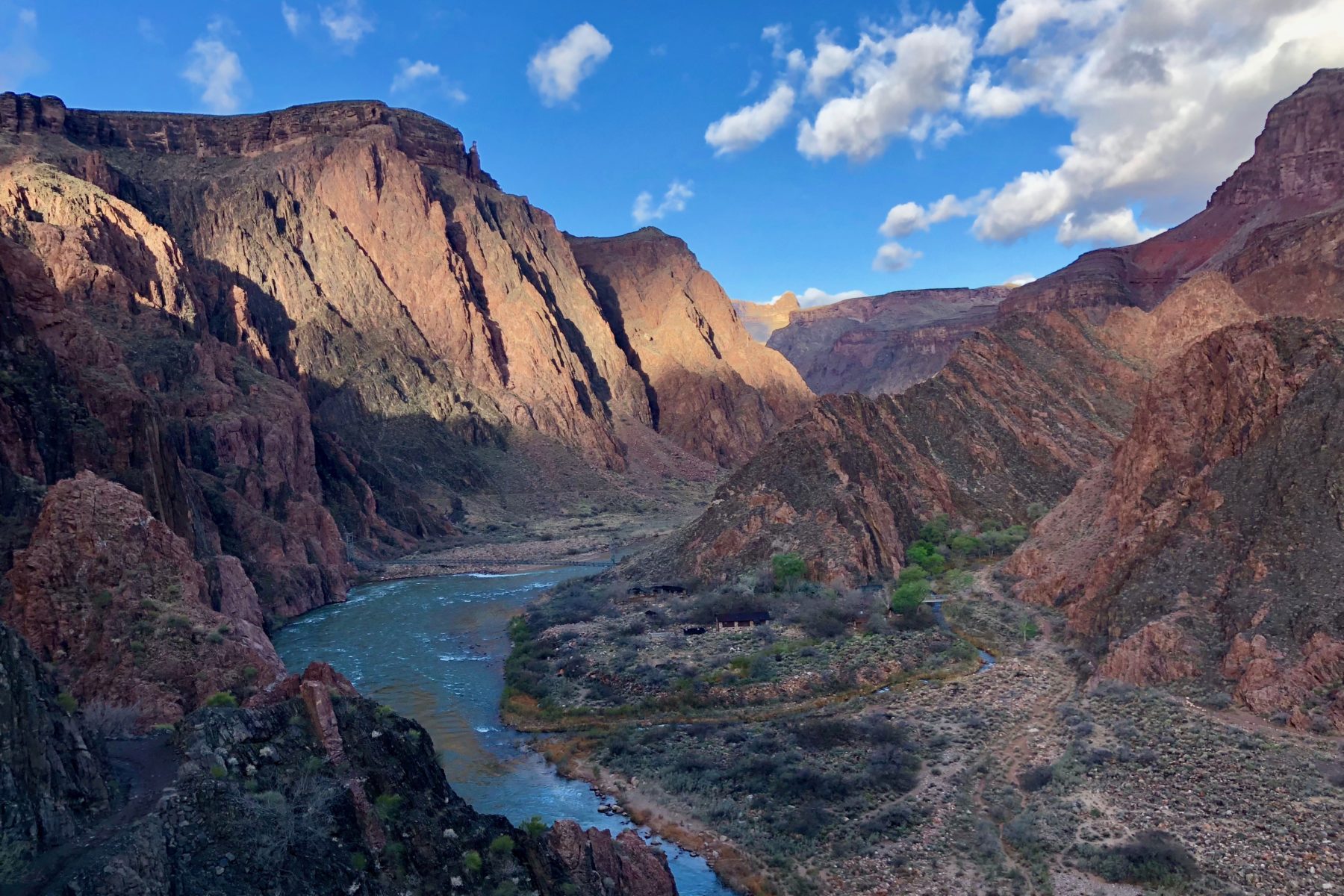
The ascent up Platteklip Gorge reminded me deeply of the Bright Angel Trail in the Grand Canyon — a grand wall tightening toward the end with increasingly shorter switchbacks as you climb. It’s a hell of a trail, full of boulders and more difficult to navigate than I had pictured. Big steps, big rocks, no shade at all. Yet the memory of Bright Angel helped tremendously. It filled me with energy and with the quiet certainty that there was still enough strength in the engine to keep going. I mean… don’t get me wrong. That was a hell of a climb. Getting to the top was not easy at all but hey… done 😃

At the top we were welcomed by two members of the organisation who were controlling passage of athletes at a timing checkpoint. Super kind people, greeting us, cheering for us, energising us. It was interesting to see how fellow athletes reacted… everyone sat down for a few minutes, catching their breath, smiles widening, stuffing in some extra food, recharging the mind after such a strenuous climb. There was a vibe of accomplishment in the air and everyone felt like a warrior for what they had just achieved. I knew that if I could get here and make it to the next aid station, the hardest part of this adventure would be conquered. Little did I know what was about to come…
When one embarks on a challenge like this, there is a balance to be found between knowing enough details in advance to give yourself the best chance of success versus leaving some things to the imagination, as too much knowledge can spoil the experience. The distance between the top of the gorge and the next aid station is roughly 6 km. In regular circumstances, on the plateau of Table Mountain and with hopes of a runnable single track, this should not take long. But after a hard hike, body tired, most water reserves consumed to compensate for earlier dehydration and with the blazing, relentless heat overhead, this became trouble. Add a technical segment with boulders and rough terrain, and it took me more than two hours to make the distance.

I started drying out again. Hikers passing by kept asking me — and the group I was with — if everything was fine, as everyone they encountered was lingering for water. I was not alone but couldn’t help feeling responsible for my situation. I should have analysed this stretch in more detail. I should have loaded much more water at Kloof Nek to ensure I had enough for the entire route. I’m always super careful with gear and with the amount of food and water I carry. I often carry more than required as I prime for safety. The organisation could have demanded a minimum water load at Kloof Nek but, in reality, I should have planned better…
The arrival at the aid station was terrifying… The whole scene looked like a war zone! Runners were spread out across every patch of shade, dehydrated faces pointed to the ground, eyes longing for rest and for a recovery that would be difficult to achieve. I knew this would require an enormous amount of focus to get myself back into shape. I had stopped sweating a while ago and my arms were covered in salt, a sandy feeling when I rubbed my hand over them. I needed to replenish, hydrate, energise and, damn it, I needed to rest!
Challenge 3: I looked for water. Isotonic. Food. They seemed to have the whole lot… except water. “Stop looking around and just ask” I thought. I was pointed to a line of large water canisters filled with a yellow liquid. “But I’d like water… that’s isotonic, right?” Turns out those canisters were filled with mountain water. While deemed safe to drink, my brain refused to accept it, as the liquid looked exactly like apple juice. I’m still aghast at the shock I felt when I realised I was dehydrated at a third of the distance I wanted to run, with a long stretch ahead before Llandudno Beach, without proper water.
Tears in my eyes, deeply disturbed, I did the only thing there was to do: loaded my flasks with that water, found shade, ate my miso sushi makis, took in a few chips, swallowed a salt capsule and rested. Around me were runners with their will broken, shattered, dried, searching for inspiration to continue. A fellow runner was being assisted by the crew, clearly suffering from heat stroke, his recovery beyond the threshold. They were coordinating via radio to have him transported as there was nothing else they could do. It was a sad sight…
I took at least 45 minutes to recover, getting myself ready to go. It was warm… really warm! Yet I felt my systems coming back online and it seemed like time to resume the adventure. But if you’re waiting for a green “Recovery 3” box, forget it! It didn’t take long before my stomach said “don’t think so” to the African mountain water. In the next hour I went from being unable to put in food, to being unable to keep any energy drink, to the point where hydrating became impossible. It was time to summon as much resilience as I could and do everything possible to reach the next aid station.


To get to Llandudno Beach, one must cross the rest of the plateau, then descend a strenuous, super steep downhill with dangerous ravines and occasional iron handles on the rocks to hold on to. In normal circumstances this would have been a wonderful ride. Feeling sick, dehydrated, depleted and starting to feel dizzy, it required full concentration to descend safely. I did the stretch with Paulo, a fellow runner who was in a similar state. It took us nearly 3h30 to get there. His girlfriend Shannon and friend Deirdre met us just before the road, offering us consolation with fresh water, ice packs and wet towels. I don’t recall another moment in my life when I held an ice pack so dearly against my chest…
The arrival at the aid station was filled with sadness. We wouldn’t be able to make the next segment to Hout Bay in time for the cutoff. It was game over… 40 kilometres in, 2000 meters of elevation and 12 hours later, the dream came to an end. Paulo was taken into an ambulance and would end up in a Cape Town hospital, receiving IV fuilds and staying there for two days. Nearly 50% of runners didn’t finish the race! Nearly 200 athletes, dreamers, adventurers, succumbed to the heat and the conditions they encountered. Too many… too many!

I found peace in the next few days in Cape Town. I had a good day out, saw wonderful views and met wonderful people during the race. I learned a lot during preparation, recovered from injury and executed my plan in a really solid manner. I ran at the back of the pack, kept a low heart rate and followed all the instructions from my coach. I adhered diligently to my nutrition plan and recovered from a couple of challenging hydration situations. Something always goes wrong… part of the preparation is learning to be ready for it. I imagine many Capetonians are used to drinking mountain water but I’m convinced that, as a foreigner in an African country, that just didn’t work for me. And clearly also not for a lot of others, judging by the number of DNFs due to stomach issues. It was one of those moments where I had to place my heart in the happiness of what I did have and let go of what was out of my control.

Now back in Germany, I felt a post-holiday, race-failure, back-to-work sadness sink in deeply. It was hard to be running again in the places where the dream had been built. I struggled to manage the disappointment and to keep myself from spiralling into the “what ifs”. Another try… A harder push… A faster run toward clean water… A better load… A better sleep… Demons to battle, regardless of how incredibly tough the conditions were. The logical mind had processed the result but now it was time for the heart to feel all the emotion.
This was my second visit to Cape Town and I feel it might not be the last. There’s always a longing to return when something hasn’t been finished. We imagine how different it could look next time and we seek closure for what was left undone. But this time, what remains is clear: I long for the natural landscapes, yes, but mostly for the wonderful people of South Africa. For their happiness, their vibrant colours, their music, their wide smiles and the open hearts with which they welcome us from the first minute to the last.
P.S.1 Paulo made a full recovery. I’m grateful our paths crossed on that mountain when both of us needed someone to walk beside. I’m confident we will meet again.
P.S.2 The void has many shapes — heat, altitude, silence, heartbreak, sickness, reconciliation. But running through it always shows me who I am.